
I’ve seen businesses spend thousands of dollars on online advertising only to disappear from customers’ minds within days. At the same time, I’ve watched smaller brands stay memorable simply because they handed someone a product they actually used every day.
That difference matters more than ever today.
A branded tumbler on a work desk, a reusable tote bag at the grocery store, or a comfortable hoodie worn during travel can quietly generate brand exposure for months without feeling like traditional advertising. People naturally trust brands they repeatedly see in everyday life.
That is one reason promotional products for business marketing continue delivering strong results across the United States. Instead of focusing on cheap giveaways that get thrown away quickly, modern businesses are investing in practical, high-retention products that customers genuinely want to keep.
The result is stronger visibility, better customer recall, and more meaningful long-term brand recognition.
Why Promotional Products Still Deliver Strong Marketing Results
Consumers see thousands of digital advertisements every single day. Because of that constant overload, physical products often feel more memorable and trustworthy.
A branded tumbler on a work desk creates visibility every morning. A tote bag carried into stores acts like mobile advertising throughout the day. Even a small item like a premium pen keeps a company visible during meetings, travel, and office work.
I’ve seen businesses improve customer recognition simply by choosing practical products people repeatedly use. That repeated exposure helps strengthen familiarity, trust, and long-term brand recall while supporting stronger business branding ideas that stay visible in everyday environments.
This strategy works especially well for local businesses, healthcare providers, real estate companies, fitness brands, restaurants, trade show exhibitors, and service-based businesses trying to build stronger customer relationships.
What Makes Promotional Products Effective Today
The most successful promotional campaigns focus on usefulness first.
Customers rarely keep products that feel cheap or unnecessary. However, when businesses offer products that improve daily convenience, people naturally continue using them for months or even years.
That creates three major marketing advantages.
First, businesses improve brand recognition through repeated impressions.
Second, customers begin associating the company with professionalism and quality.
Third, useful branded products help strengthen customer loyalty because the interaction feels valuable rather than purely promotional.
This is one reason physical promotional marketing still performs extremely well despite the rapid growth of online advertising.
Top-Rated Promotional Products by Category
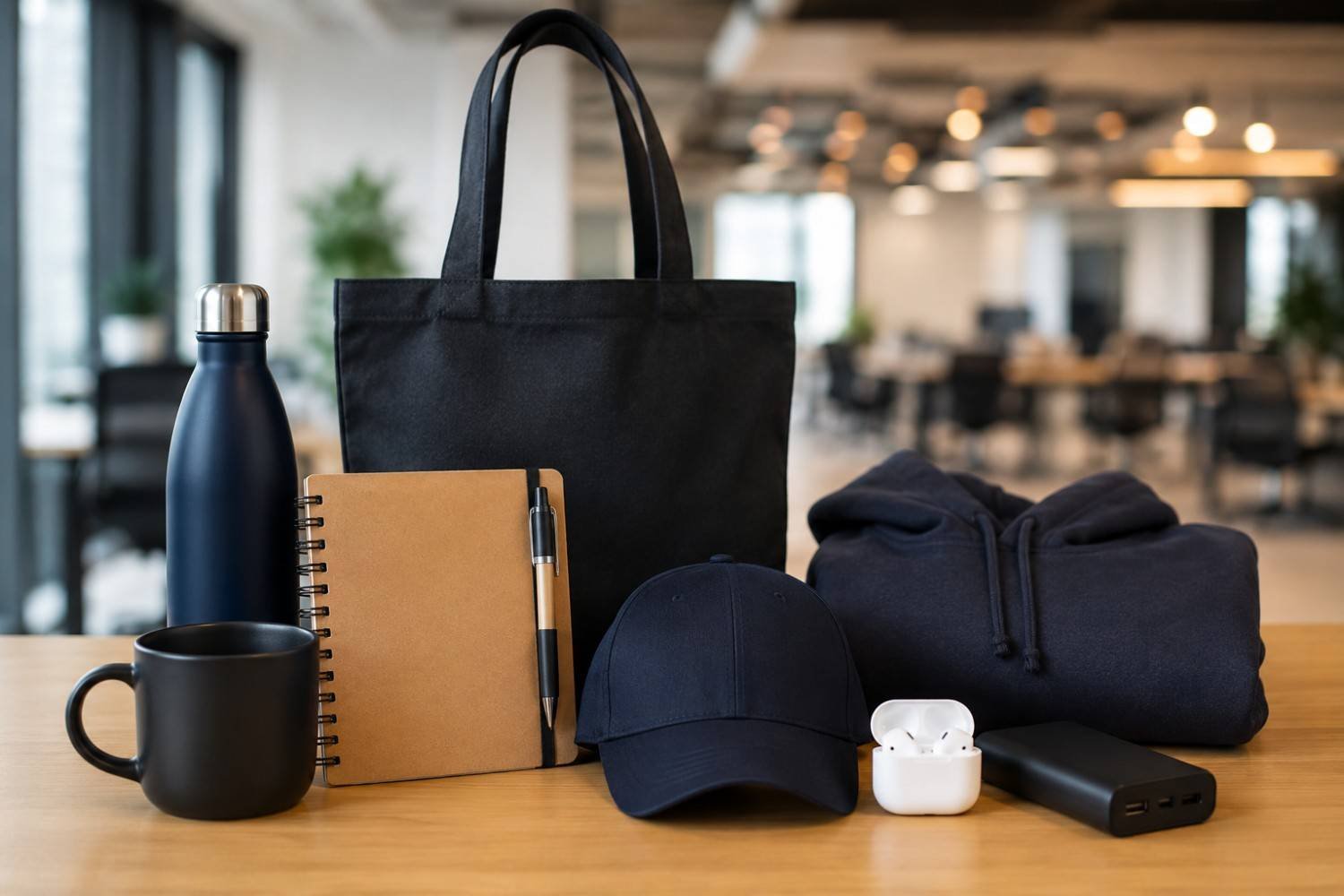
When selecting custom merchandise, I always recommend prioritizing daily utility. Products people consistently use generate significantly stronger long-term brand visibility.
Apparel & Wearables That Create Continuous Brand Exposure
Wearable products essentially turn customers into mobile brand ambassadors.
Promotional T-shirts remain one of the most effective branded products because consumers actually wear them regularly. Comfortable designs with clean branding tend to generate thousands of lifetime impressions.
Custom hoodies and polos are becoming increasingly popular among businesses wanting a more premium image. These items improve perceived brand value while creating longer retention compared to lower-cost giveaways.
Lifestyle-focused products like branded sunglasses and socks are also growing rapidly, especially during outdoor events, festivals, fitness campaigns, and seasonal promotions.
Drinkware Products That Stay Visible Every Day
Drinkware remains one of the highest-performing promotional categories because customers use these products repeatedly throughout the week.
Custom stainless steel water bottles continue growing in popularity because they combine convenience, sustainability, and long-term visibility. Many consumers now actively prefer reusable products over disposable alternatives.
Ceramic coffee mugs still perform extremely well in office environments. A mug sitting on a desk quietly creates passive brand impressions every single day.
Insulated tumblers and travel cups are especially effective for audiences constantly commuting or traveling. Their higher perceived value also increases customer retention.
Office & Tech Accessories That Customers Actually Keep
Corporate and technology-focused products perform especially well because they naturally integrate into work environments.
Personalized metal pens remain highly affordable while still generating long-term visibility. Businesses often use them for conferences, onboarding kits, and client meetings because they are practical and easy to distribute.
Custom notebooks and planners create strong desk visibility for months at a time. Hardcover and leatherette styles typically feel more premium and professional.
Portable chargers and power banks have become some of the most valuable modern promotional items. Customers frequently keep and use them during travel, remote work, conferences, and daily commuting.
I’ve noticed that tech accessories often generate stronger customer appreciation because they solve real problems in everyday life.
Bags & Utility Products Continue Growing Fast
Reusable promotional bags continue performing extremely well because consumers use them constantly.
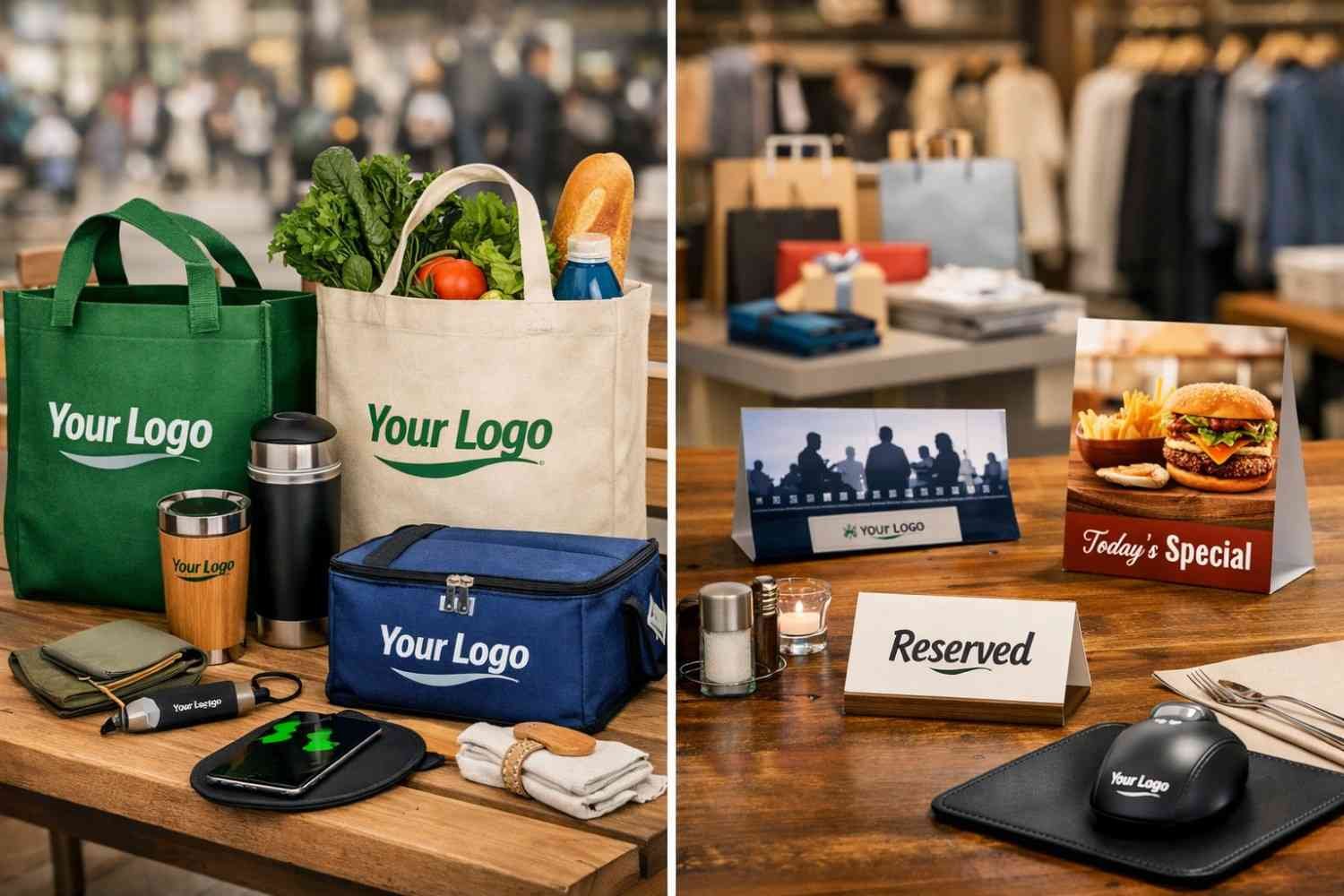
Canvas tote bags create repeated public exposure while supporting eco-conscious branding efforts. Many businesses now prefer reusable bags because they align with sustainability trends across the US market.
Custom tent cards are also gaining popularity for localized branding inside restaurants, retail stores, conferences, and reception areas. They help businesses maintain visibility directly at customer interaction points.
How to Choose the Right Promotional Products for Your Audience
One of the biggest mistakes businesses make is selecting products based only on price.
The smarter approach is understanding customer behavior first.
Tech-focused audiences usually respond better to power banks, charging accessories, and desk gadgets. Eco-conscious consumers often prefer reusable bags, sustainable drinkware, and recyclable materials. Corporate clients generally value premium office products and apparel more highly.
Audience alignment matters far more than simply ordering large quantities of inexpensive items.
I’ve also noticed that businesses generating the strongest results usually maintain simple, professional branding rather than oversized logos or overly crowded designs.
Why Product Design Matters More Than Ever
Design quality plays a major role in whether customers continue using promotional products.
More consumers now expect products to look modern, minimal, and visually clean. High-contrast artwork, strong readability, and premium finishing help products feel far more valuable.
Poor-quality printing or low-resolution graphics can immediately reduce perceived brand credibility.
Businesses should also prioritize color combinations that make logos visible without overwhelming the product design itself.
Subtle branding often performs better because customers feel more comfortable using the item publicly.
Integrating QR Codes and Digital Marketing
One of the smartest trends I’m seeing right now is businesses combining physical products with digital engagement.
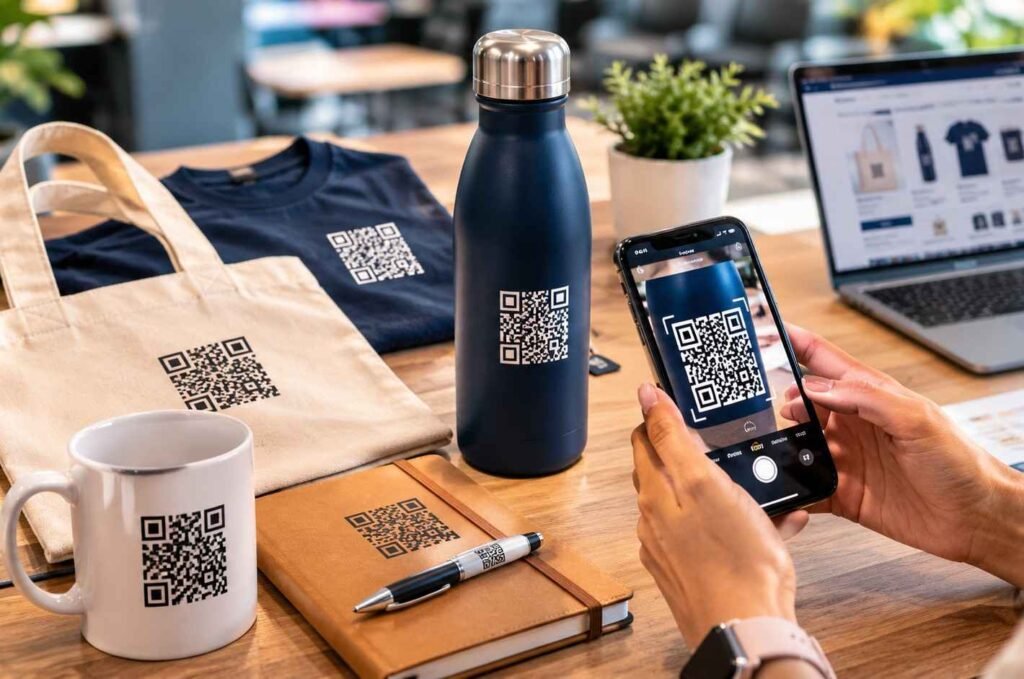
Adding a clean QR code to branded merchandise can guide customers directly toward landing pages, promotional offers, loyalty programs, appointment scheduling, or newsletter sign-ups.
This creates measurable offline-to-online engagement while helping businesses track campaign performance more accurately.
It also helps promotional marketing feel more interactive and modern rather than purely traditional.
Eco-Friendly Promotional Products Are Reshaping the Industry
Sustainability is becoming a major purchasing factor across the American market.
Consumers increasingly pay attention to how products are made, packaged, and reused. Because of that, eco-friendly promotional items are growing rapidly in popularity.
Reusable shopping bags, bamboo products, recyclable notebooks, stainless steel drinkware, and sustainable packaging materials all help businesses strengthen environmentally conscious branding.
Companies that align promotional campaigns with sustainability often improve both customer trust and long-term brand perception simultaneously.
Common Promotional Product Mistakes Businesses Should Avoid
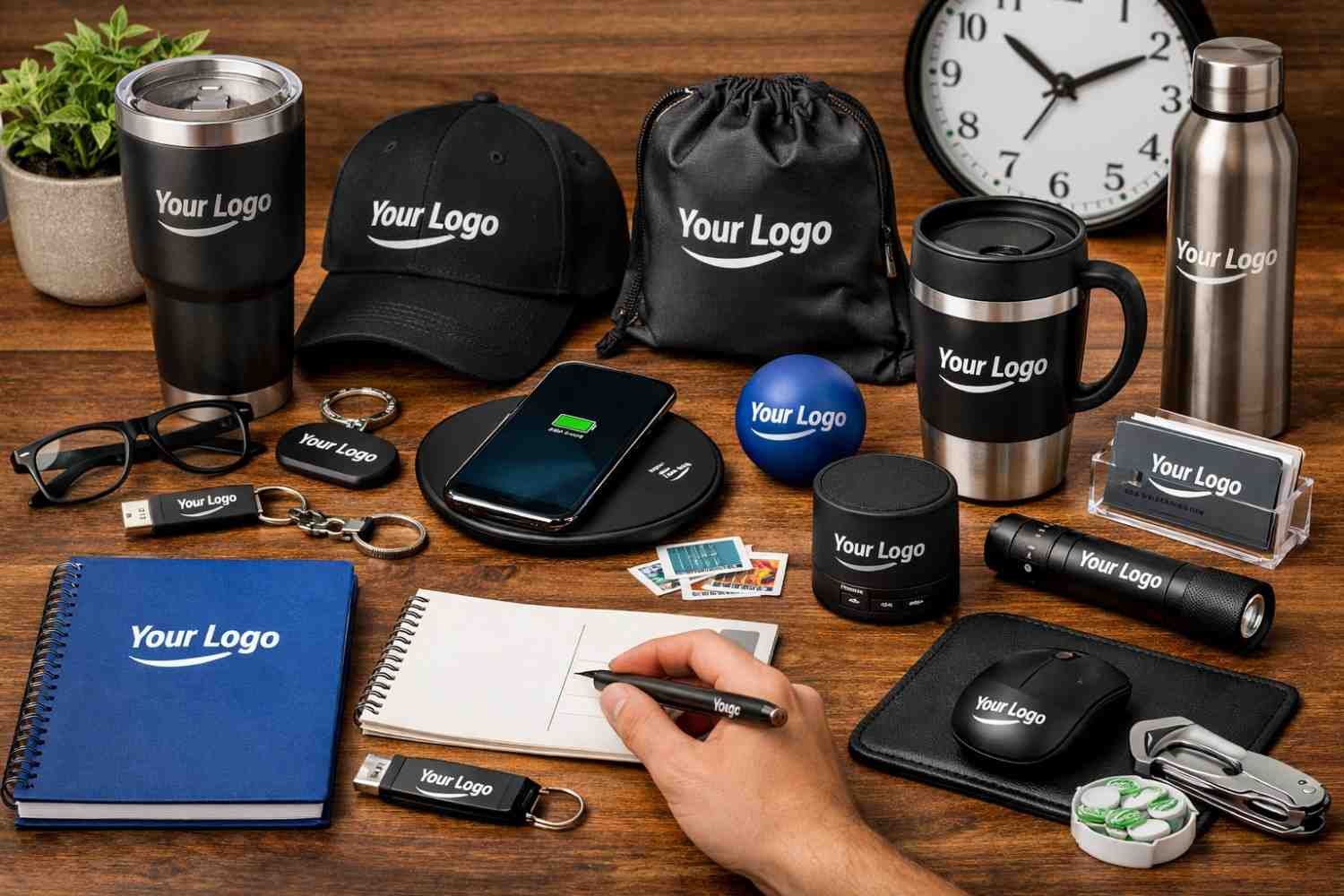
I’ve seen many companies waste marketing budgets by focusing only on quantity instead of usefulness.
Cheap products often get discarded quickly, which limits brand exposure entirely.
Another common mistake is ignoring audience relevance. A promotional product only works when it naturally fits the customer’s lifestyle.
Businesses should also avoid cluttered branding. Minimal, professional designs usually generate stronger customer retention and better public usage.
Timing matters as well. Promotional campaigns tied to conferences, seasonal events, product launches, or local community activities often generate significantly stronger engagement.
The Future of Promotional Products for Business Marketing
The promotional merchandise industry is becoming more strategic every year. Businesses are now focusing less on generic giveaways and more on products that create authentic customer experiences.
I genuinely believe promotional products for business marketing will continue evolving toward premium quality, sustainability, personalization, and practical utility. Companies that treat promotional merchandise as part of the customer experience rather than just advertising will likely build stronger long-term brand loyalty.
The businesses seeing the best results today are not simply giving products away. They are creating useful brand interactions that stay visible long after the first customer contact.
Frequently Asked Questions (FAQs)
1. What are the best promotional products for small businesses?
Some of the best promotional products include tote bags, drinkware, notebooks, T-shirts, tech accessories, and reusable daily-use items that customers naturally keep using.
2. Why do promotional products still work in 2026?
Physical products create long-term brand exposure that lasts much longer than digital ads. Useful products also improve trust, customer loyalty, and brand recognition.
3. Are eco-friendly promotional products becoming more popular?
Yes. Sustainable products like reusable bottles, canvas bags, recyclable notebooks, and bamboo accessories are growing rapidly because consumers increasingly value environmentally responsible brands.
4. How can businesses choose the right promotional products?
Businesses should focus on audience behavior, daily utility, quality, branding simplicity, and long-term usefulness instead of only choosing low-cost items.
5. Are tech promotional products worth the investment?
Yes. Portable chargers, power banks, phone accessories, and desk gadgets usually generate strong retention because customers use them regularly during work and travel.
Beyond the Giveaway
The strongest promotional campaigns are no longer about handing out random products. Businesses now compete through usefulness, quality, and memorable customer experiences.
That is exactly why promotional products for business marketing continue outperforming many short-term advertising methods. A useful product keeps a brand visible in real-world environments where customers naturally spend their time every single day.