


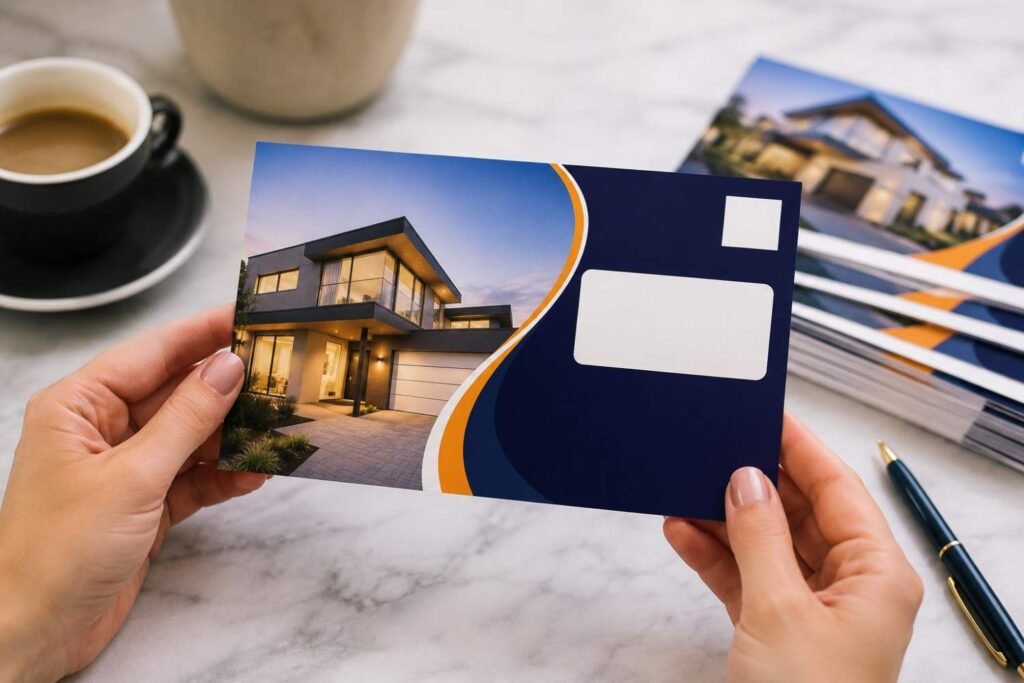
I’ve worked with enough local businesses to know that most marketing channels become overcrowded fast. Social media feeds move quickly, email inboxes stay overloaded, and online ads often disappear before customers even notice them. That is exactly why direct mail has quietly become one of the most effective local advertising channels again.
The smartest brands are not using outdated generic mailers anymore. They are using modern postcard marketing ideas that combine customer psychology, hyper-local targeting, premium design, automation, and digital tracking to create campaigns that actually drive measurable revenue.
Across the United States, restaurants, gyms, dental clinics, med spas, roofing companies, real estate agencies, ecommerce brands, and home service businesses continue investing heavily in direct mail because it keeps producing results. A strong postcard feels personal, tangible, and trustworthy in ways most digital ads simply cannot replicate.
The biggest difference today is strategy. Businesses that combine direct mail with digital retargeting, QR codes, automated customer win-back campaigns, and neighborhood targeting are creating far stronger customer engagement than businesses relying only on social media ads.
Why Postcards Still Work So Well in Local Marketing
Direct mail succeeds because physical advertising naturally attracts more attention than digital clutter. Most consumers scroll past thousands of online ads every week, but they still notice something physically delivered to their home.
Postcards work especially well for local businesses because they create immediate geographic relevance. A nearby restaurant, salon, or home service company instantly feels more accessible when the customer recognizes local streets, neighborhoods, or landmarks on the card.
Another major advantage involves visibility. Unlike envelopes that remain unopened, postcards immediately display the headline, offer, and visuals without requiring any action from the customer first.
That visibility becomes even stronger when businesses use oversized formats, premium cardstock, personalized messaging, and bold headlines positioned correctly.
High-Converting Campaign Strategies Businesses Use Today
Most first-time postcard campaigns fail because businesses treat them like flyers instead of strategic conversion tools.
The best-performing campaigns now focus on customer behavior, retention, timing, and personalization.
Automated Customer Win-Back Campaigns
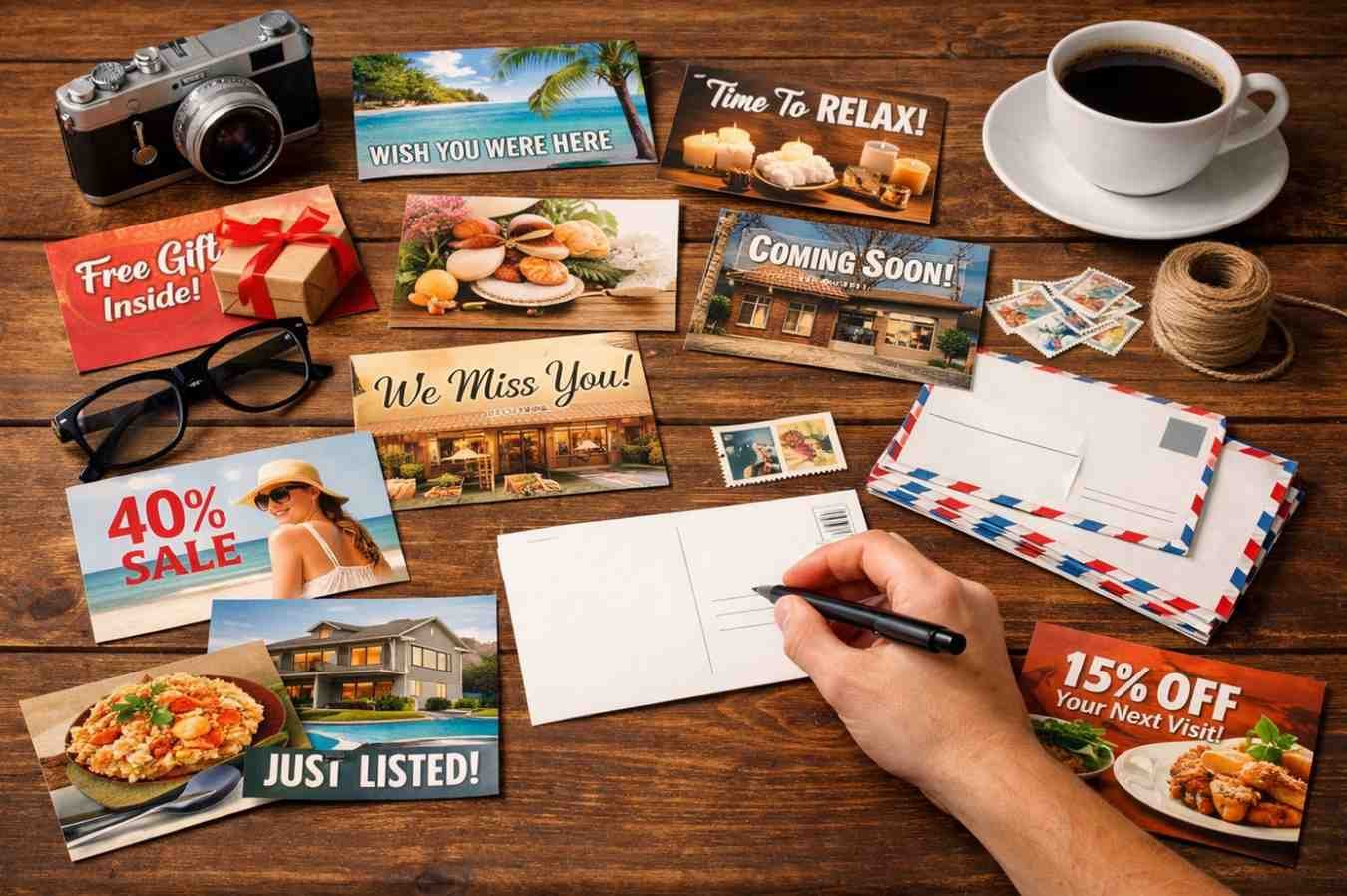
One of the most profitable direct mail strategies targets inactive customers who have not purchased in several months.
Instead of chasing entirely new customers, businesses send personalized postcards saying they miss the customer’s business while offering an exclusive incentive to return. This approach works extremely well for salons, gyms, restaurants, medical practices, and subscription businesses.
Retention marketing often produces significantly lower acquisition costs because the customer already recognizes the brand.
Hyper-Local Neighborhood Targeting
Local visibility still dominates small business growth.
Businesses across the United States now use carrier route targeting and Every Door Direct Mail campaigns to reach neighborhoods located within a few miles of their storefronts. This approach works especially well for restaurants, fitness studios, dentists, coffee shops, HVAC companies, and local retailers.
I’ve noticed that postcards featuring simple neighborhood maps and location-based messaging consistently improve response rates because they immediately reinforce convenience.
Abandoned Cart Direct Mail Retargeting
Modern direct mail has become surprisingly advanced.
Many ecommerce brands now use programmatic digital-to-direct-mail platforms that match anonymous website visitors with physical addresses. If a customer abandons a shopping cart or browses products without purchasing, the business automatically sends a postcard within one or two days.
This strategy reconnects the customer with the product after digital ads disappear from their feeds.
It also feels far less intrusive than aggressive online retargeting ads.
Birthday and Anniversary Campaigns
Personalized celebration mailers continue performing extremely well because they feel thoughtful instead of promotional.
Restaurants often send birthday discounts. Retail brands offer anniversary rewards. Med spas provide loyalty treatments. Gyms offer referral bonuses tied to membership anniversaries.
These campaigns improve customer retention because they create emotional connection instead of transactional advertising.
Referral Postcards That Multiply Reach
Referral marketing remains one of the lowest-cost customer acquisition strategies available.
Many businesses now include referral postcards directly after purchase. A customer receives a simple offer encouraging them to share the card with a friend. Once the friend redeems the offer, both people receive a reward.
This creates a two-way referral loop that helps businesses expand organically through customer trust.
Design Tactics That Improve Response Rates
The strongest postcard campaigns are usually visually simple but psychologically strategic.
Businesses often make the mistake of overcrowding mailers with too much information. High-performing postcards focus heavily on attention control.
Address-Side Dominance
One of the smartest design strategies involves placing the strongest headline directly on the address side of the postcard.
Mail typically arrives face-up. If the visible side looks empty or generic, recipients often discard it immediately without flipping it over.
Strong headlines on the address side instantly improve attention before the customer even fully handles the mailer.
Vertical Orientation Grabs More Attention
Most postcards arrive stacked horizontally.
A vertical postcard forces the customer to physically rotate the card, which naturally creates a small interruption in attention patterns. That interruption often gives businesses a few extra seconds of focus that horizontal mailers never receive.
Small attention advantages can dramatically impact response rates over large mailing campaigns.
Premium Cardstock Builds Trust
Physical quality influences brand perception more than many businesses realize.
Thin postcards often feel disposable. Heavyweight cardstock feels more professional, credible, and premium. Many high-performing campaigns now use 14-point or 16-point cardstock because thicker materials create stronger tactile impressions.
Premium materials subtly communicate business quality before the customer even reads the message.
The Single-Message Rule
One of the biggest mistakes businesses make is promoting multiple offers at once.
The strongest postcard campaigns usually contain:
- one headline
- one offer
- one call to action
- one conversion goal
Clear messaging almost always outperforms cluttered promotional layouts.
Bridging Offline Marketing With Digital Conversion Tracking
The most effective direct mail campaigns no longer operate separately from digital marketing systems.
Instead, businesses now connect physical mail directly to measurable online behavior.
QR Codes That Drive Immediate Action
Modern consumers expect convenience.
That is why large, easy-to-scan QR codes now appear on many successful direct mail campaigns. Customers can instantly:
- redeem offers
- book appointments
- watch demos
- claim discounts
- schedule consultations
- access personalized landing pages
Businesses using mobile-friendly landing pages usually outperform brands sending customers to generic homepages.
Handwritten Personalization Techniques
Automated variable printing technology now allows businesses to mimic handwritten personalization at scale.
Adding first names, handwritten-style fonts, and localized messaging dramatically changes how recipients emotionally interpret the postcard.
The mail feels more personal and less corporate.
That small emotional difference often improves response rates significantly.
Trackable Promo Codes for Accurate ROI
One of the smartest direct mail improvements involves segmented promo code tracking.
Businesses now print unique promo codes tied to:
- neighborhoods
- customer segments
- ZIP codes
- campaigns
- demographics
This allows marketers to calculate acquisition costs, conversion rates, and customer lifetime value much more accurately.
How US Small Businesses Use Direct Mail Successfully

Across the United States, local businesses continue finding creative ways to use postcard marketing ideas to dominate nearby markets.
Real estate agents use oversized postcards featuring recently sold properties and neighborhood updates.
Restaurants promote seasonal menu launches and family meal discounts.
Roofing companies target storm-affected neighborhoods after severe weather events.
Dental clinics automate appointment reminders and patient retention campaigns.
Fitness studios use direct mail to promote limited-time memberships and referral incentives.
The businesses seeing the strongest results usually combine direct mail with local SEO, Google Business Profile optimization, social media advertising, and customer retention systems.
Frequently Asked Questions (FAQs)
1. What makes postcard marketing effective?
Postcard marketing works because it delivers physical, highly visible promotions directly to customers without relying on crowded digital platforms.
2. Do postcards still work for small businesses?
Yes. Many US small businesses use postcards to increase local awareness, generate leads, and improve customer retention.
3. How can I track postcard campaign results?
Businesses commonly use QR codes, custom promo codes, and dedicated landing pages to measure conversions and campaign ROI.
Why Smart Businesses Still Invest in Direct Mail
I genuinely believe direct mail remains one of the most underestimated growth channels available today. While most businesses compete aggressively online, fewer brands invest properly in physical marketing experiences that customers can actually hold, remember, and revisit later.
The companies generating the strongest results are not treating postcards like old-fashioned advertising. They are using automation, personalization, behavioral targeting, premium design, QR tracking, integrated digital campaigns, and even custom label printing to create measurable business growth.
The biggest advantage is that modern postcard marketing ideas now combine physical trust with digital convenience. That combination creates a marketing channel that feels far more personal, memorable, and actionable than most online advertising alone.